The use of caffeine as a way of improving footballers' performance is a subject of growing interest in professional and amateur football alike. Players and coaching staff are constantly looking for effective ways to optimise individual and collective performance. Caffeine, a widely consumed substance known for its stimulant effects, has attracted the attention of nutritionists, coaches and players because of its potential benefits for physical and cognitive performance. Understanding how caffeine is used in football and its effects on footballers is essential for clubs that want to maximise their players' performance and stay competitive in a demanding sporting environment.
Caffeine: a commonly used substance
Caffeine is a chemical compound belonging to the xanthine class. It is naturally present in many food sources, including coffee, tea, fizzy drinks and chocolate. Caffeine can also be consumed in the form of supplements and extracts. It is known for its stimulant properties on the central nervous system, which can lead to increased alertness, vigilance and concentration.
How does it work? It acts mainly by blocking adenosine receptors in the brain. Adenosine is an inhibitory neurotransmitter that promotes drowsiness and relaxation. By blocking these receptors, caffeine prevents adenosine from exerting its inhibitory effect, which leads to increased neuronal activity and a heightened feeling of alertness. In addition, caffeine can also stimulate the release of other neurotransmitters such as dopamine and norepinephrine, which may contribute to its stimulant effects.
Effects of caffeine on physical performance
Caffeine has been widely studied for its beneficial effects on endurance during prolonged physical activity. Endurance refers to the ability to sustain physical activity, such as running, jumping or changing direction, for a prolonged period without feeling tired or exhausted. It is an essential element for footballers, who must be able to keep up an intense level of activity throughout the match.
A study published in the journal PLoS One in 2012 showed an improvement in the ability to sprint repeatedly and in the distance covered at high intensity during a football match for a group of players who had consumed a caffeine-containing energy drink. Jump height was also improved in this group of players. More recently, in 2023, a study in the journal Pal Arch showed that, in a group of players aged 18 to 25, those who had received doses of caffeine between 3 and 9 mg per kg of body weight all showed a significant improvement in their performance on the Yo-Yo Intermittent Recovery Level 1 (YYIR1) test, which measures aerobic capacity. The players who received the highest dose of caffeine, namely 9 mg/kg of body weight, showed the greatest improvement.
Several studies, including one in the European Journal of Sports Science in 2017, have also shown that consuming caffeine before exercise can increase muscle strength. These effects can be particularly important for football or futsal players, who are very exposed to explosive actions such as sprints, jumps or shots.
In addition to these beneficial effects, caffeine can also help spare glycogen, the energy source used during exercise. By sparing glycogen, caffeine allows the body to use more fat as fuel, which may help improve endurance and delay the onset of fatigue (Ivy et al., 1979; Spriet et al., 1992). Beyond its effects on performance during exercise, caffeine may also play a role in muscle recovery. A study published in the Journal Nutrients in 2020 revealed that caffeine combined with carbohydrate could speed up recovery after intense exercise by helping to replenish glycogen stores, the human body's energy reserve.

Effects of caffeine on cognitive performance
Caffeine is also widely known for its stimulant effects on the central nervous system. Studies have shown that consuming caffeine can increase alertness, reduce the feeling of mental fatigue and improve concentration. As footballers have to maintain sustained attention throughout a match, keep track of the movements of teammates and opponents and make quick decisions, they may benefit from these positive effects.
Caffeine can boost concentration and decision-making in footballers. A study in the journal Nutrients from 2022 examined the effects of caffeine on tactical decision-making in football. The researchers found that participants who had consumed caffeine made fewer defensive errors than participants who had received a placebo. In addition, the players who ingested caffeine showed greater ball possession. Caffeine therefore led to better tactical decision-making during the protocol, but did not have the same positive effects on other fundamental tactical principles.
Reaction and coordination are also crucial aspects of the game. A study published in the Journal of the International Society of Sports Nutrition in 2018 showed that caffeine improved reaction time. These improvements can have a significant impact on individual and collective performance during a football match.

Use of caffeine in professional football
The use of caffeine has become a common practice in football clubs, particularly in England, where players and support teams are at the forefront of optimising individual and collective performance. According to recent studies, caffeine consumption is widespread in the majority of English professional football clubs, with 35 out of 36 clubs surveyed saying they provide caffeine to players in order to improve their performance (Tallis et al., 2021). This practice has developed because of the potential effects of caffeine on physical and cognitive performance seen above, such as increased endurance, reduced muscle fatigue, and improved alertness and concentration.
In English football clubs, the dosage and timing of caffeine consumption vary, but some trends emerge. Recommended doses are generally between 2 mg/kg and 6 mg/kg of body weight, with the most common dose being 3 mg/kg (Tallis et al., 2021). It is important to find the optimal dose for each player, taking into account their individual tolerance to caffeine and the desired effects. The EFSA (European Food Safety Authority) recommends not exceeding a dose of 400 mg of caffeine per day for a healthy adult.
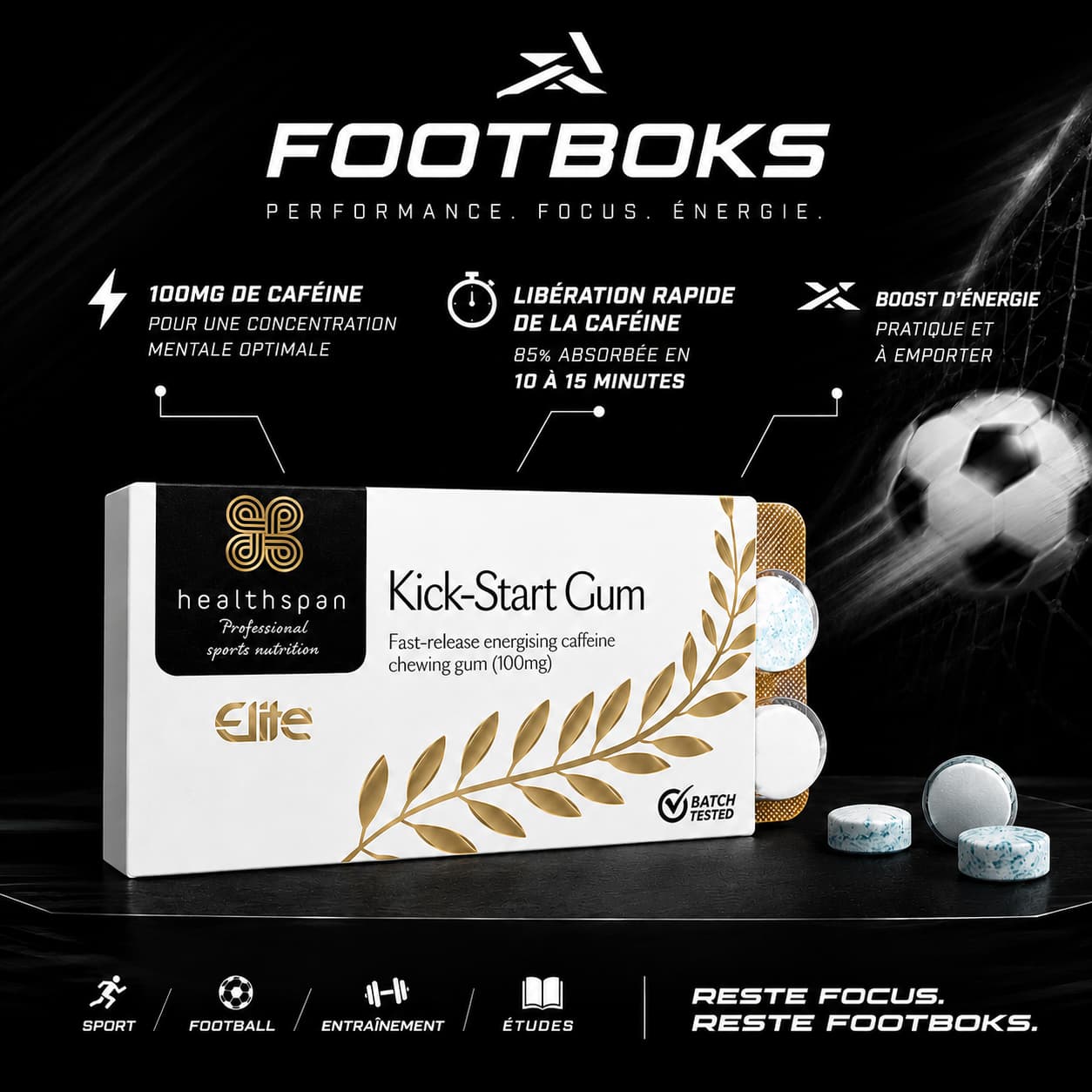
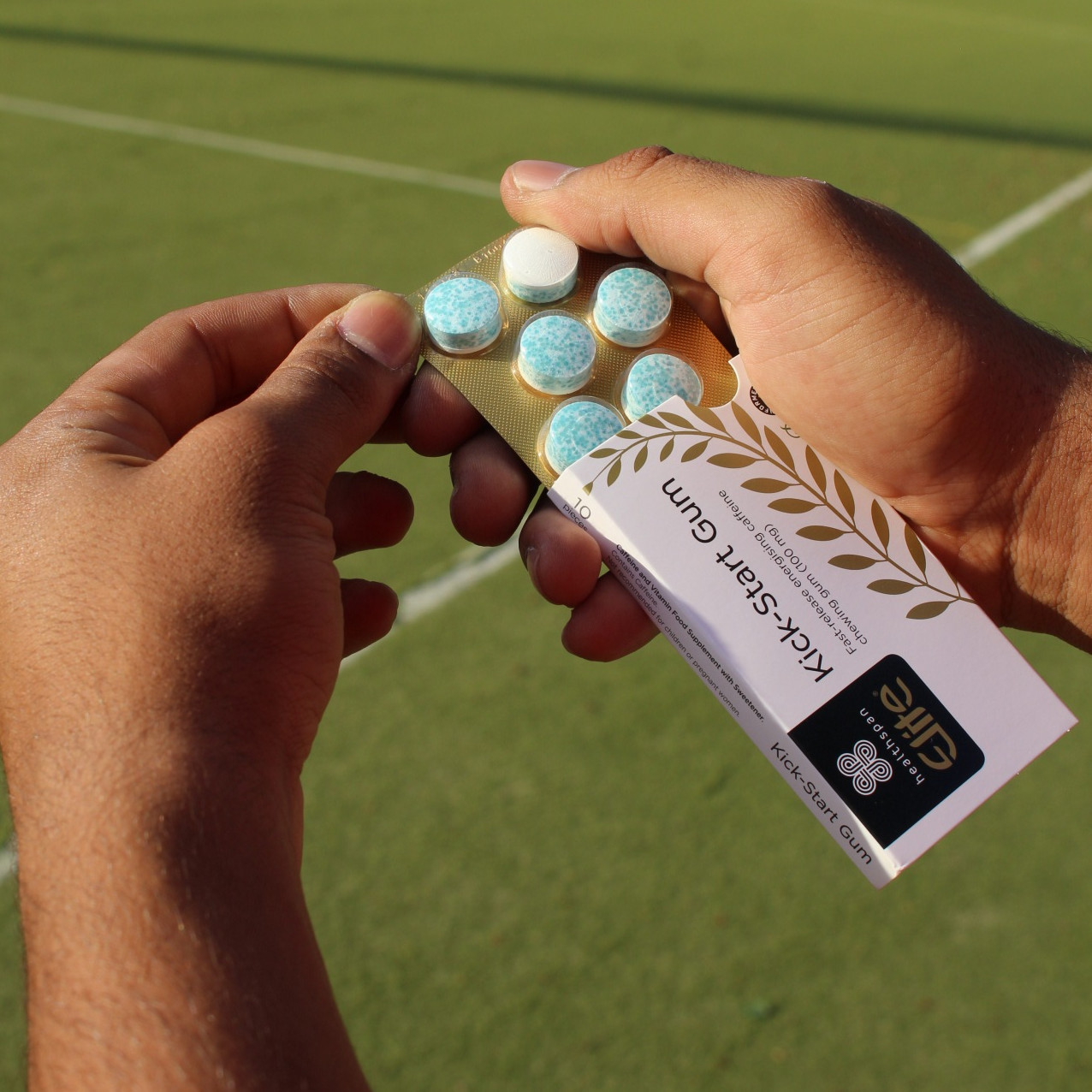
As for timing, caffeine is often consumed between 15 and 90 minutes before the match, most frequently 30 to 45 minutes before kick-off (Tallis et al., 2021). As caffeine can be consumed from different sources, the optimal moment for taking it depends heavily on the source used. For example, caffeine chewing gums may need a shorter gap between consumption and the start of exercise than capsules (Guest et al., 2021) or caffeine-containing gels. Studies have shown that chewing caffeinated gum (3 mg/kg) improves performance when consumed just before physical activity, but has no positive effect on performance when taken 1 or 2 hours earlier. This is because around 85% of the caffeine dose is released and absorbed in the first 5 minutes of chewing. This almost immediate absorption in the target tissues can lead to a faster onset of positive effects on performance (Anderson, 2017). So, by choosing the right source of caffeine and respecting the right timing, football clubs can maximise the beneficial effects of caffeine on their players' performance.

Managing the use of caffeine
We can't say it often enough, but it is crucial to take each player's individual circumstances into account. Tolerance to caffeine can vary from one person to another, and some players may be more sensitive to its stimulant effects. It is therefore essential to monitor caffeine consumption carefully and make sure it does not exceed recommended levels, to avoid side effects such as anxiety, restlessness, headaches and sleep disturbances (Anderson, 2017). In addition, caffeine can have diuretic effects, meaning it increases urine production. That is why adequate hydration must be maintained.
For clubs wishing to use caffeine as a tool for improving performance, it is important to put in place protocols for monitoring caffeine consumption, in order to control the doses given and make sure players follow the recommendations. Clubs should also provide ongoing education to players on the effects of caffeine, good consumption practices and the risks associated with excessive use. For these players, it can be useful to consult nutrition and performance professionals for individualised advice on caffeine use according to each person's needs and goals.
In conclusion, the use of caffeine in football has the potential to improve both the physical and cognitive performance of players. However, responsible use of caffeine requires a thorough understanding of its effects, close monitoring of consumption and proper education of players. By continuing to carry out research and following established recommendations, football clubs and players can optimise the benefits of caffeine while minimising the potential risks, thereby contributing to improved sporting performance.
Find all our caffeine-containing boosts in the Footboks shop!